
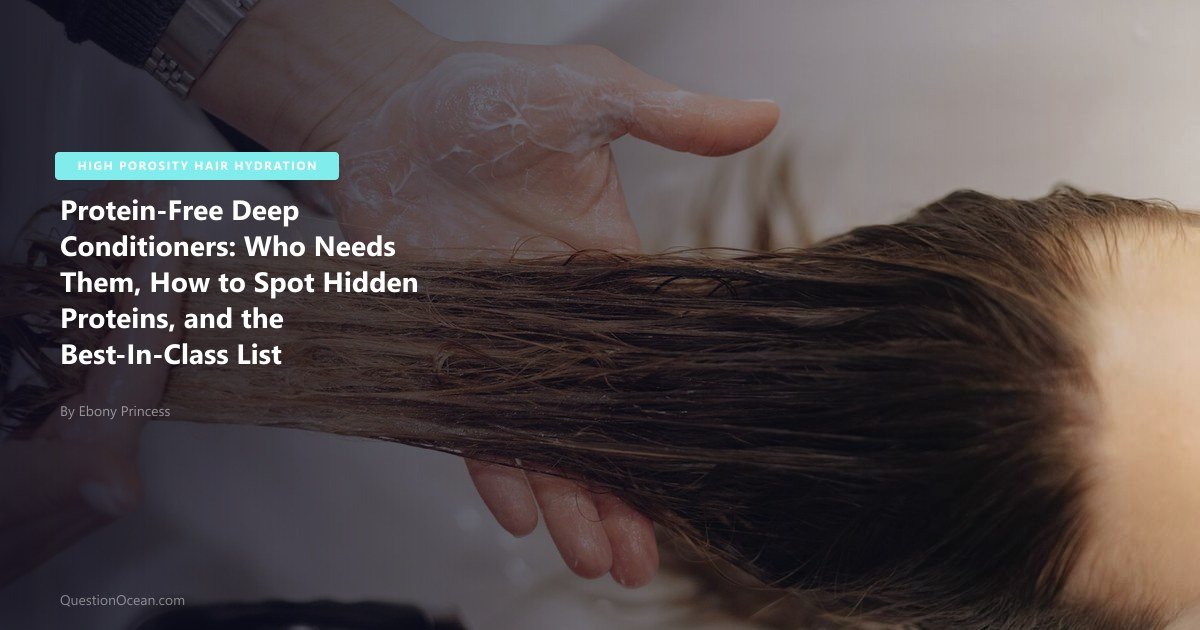
Most people who think they need a “protein free” deep conditioner are reacting to a real problem with the wrong fix, protein overload genuinely exists, but it’s also misdiagnosed constantly because the signs (stiff, brittle, dry hair) overlap perfectly with under-moisturized or over-clarified hair, and the only way to know for sure is the wet/dry stretch test. A protein-free deep conditioner is a deep treatment formulated without hydrolyzed keratin, hydrolyzed wheat, hydrolyzed silk, hydrolyzed collagen, amino acids, or any of the 14 commonly hidden protein ingredients, and it’s specifically useful for fine low-porosity hair, hair that has reacted badly to keratin treatments, and the small percentage of people whose hair structure rejects supplementary protein even when damaged. Most curly and high-porosity hair actually benefits from periodic protein, so going fully protein-free is a deliberate choice, not a default.
This guide covers when protein-free is the right call, the 14 hidden protein ingredients that catch out people who think they’re avoiding protein but aren’t, and the products that genuinely deliver in 2026.
For the complete framework on balancing protein and moisture across hair types, see our protein vs moisture balance guide.
The Wet/Dry Stretch Test (Diagnose Before Switching)
Last updated: May 21, 2026
Before you decide your hair needs protein-free conditioners, run this 60-second diagnostic. It tells you whether you actually need less protein or more.
The test:
- Take a single shed hair (one that came out naturally, not pulled)
- Hold it between your thumbs and gently stretch
- Repeat with a wet shed hair (one from your shower)
| Result | What It Means | What You Need |
|---|---|---|
| Hair stretches a lot then breaks | Too much moisture, not enough protein | More protein |
| Hair stretches slightly then snaps | Balanced | Maintain current routine |
| Hair barely stretches before snapping | Too much protein | Less protein, more moisture (go protein-free) |
| Hair stretches and bounces back | Healthy and balanced | Maintain |
The “barely stretches before snapping” result is the genuine indicator that you have protein overload and would benefit from a protein-free deep conditioner. The other results mean a different fix.
Who Actually Needs Protein-Free Deep Conditioners
Group 1. Fine Low-Porosity Hair
Fine hair has thin individual strands. Adding hydrolyzed proteins coats those thin strands with extra polymer film, making them feel stiff and lifeless. Low-porosity cuticles are tightly packed, so the protein sits on the surface rather than penetrating, which compounds the stiffness. Fine + low porosity is the classic protein-free profile.
Group 2, Post-Keratin-Treatment Recovery
People who’ve had a keratin smoothing treatment (Brazilian blowout, formaldehyde or formaldehyde-free keratin) already have hair saturated with keratin protein. Adding more through a deep conditioner creates protein overload faster than it would on untreated hair. Use protein-free for 4-6 months after a keratin treatment.
Group 3. Genuinely Protein-Reactive Hair
A small subset of people. Maybe 5-10% of curly hair. Has genetic protein sensitivity where even normal hair-strengthening proteins cause stiffness within 1-2 uses. These folks find out the hard way that every “balanced” routine still feels rigid, and switching to protein-free fixes it immediately.
Group 4. Already Protein-Overloaded Hair
If the wet/dry test shows protein overload, switch to protein-free for 4-6 weeks until hair stretch returns to normal. This isn’t a permanent switch — it’s a reset.
Who Doesn’t Need Protein-Free
- High-porosity hair, generally needs periodic protein to fill cuticle gaps
- Color-treated and bleached hair, chemically damaged and benefits from rebuilding proteins
- Coily Type 4 hair, usually thrives on regular protein-moisture balance
- Heat-damaged hair, needs protein to support compromised cuticle
The 14 Hidden Protein Ingredients (The Tricky Part)
The reason most “protein-free” routines accidentally include protein is that 14 different ingredients deliver protein without using the word “protein” on the label. Here’s the complete list to scan for:
| Ingredient | What It Is | Where It Hides |
|---|---|---|
| Hydrolyzed wheat protein | Wheat-derived | “Strengthening” conditioners |
| Hydrolyzed soy protein | Soy-derived | Vegan protein conditioners |
| Hydrolyzed silk protein | Silk fiber-derived | Luxury hair masks |
| Hydrolyzed collagen | Animal-derived | Anti-aging formulas |
| Hydrolyzed keratin | Wool/feather-derived | Smoothing products |
| Hydrolyzed oat protein | Oat-derived | “Gentle” conditioners |
| Hydrolyzed rice protein | Rice-derived | Asian beauty formulas |
| Hydrolyzed quinoa | Quinoa-derived | “Clean” beauty products |
| Hydrolyzed corn protein | Corn-derived | Natural product lines |
| Hydrolyzed pea protein | Pea-derived | Vegan formulas |
| Amino acids (any specific ones listed) | Protein building blocks | “Amino acid” products |
| Yogurt extract | Milk protein | DIY-style products |
| Egg yolk powder | Egg protein | Old-school formulas |
| Whey protein | Milk-derived | “Repair” treatments |
Practical scan rule: Look for any word containing “hydrolyzed”, that’s almost always a protein. Then look for the words “amino,” “yogurt,” “egg,” “silk,” “collagen,” “keratin,” and “wheat” anywhere in the ingredient list. If any appear, the product contains protein.
What Protein-Free Conditioners Use Instead
A genuinely protein-free deep conditioner replaces the strengthening function with one of these mechanisms:
Mechanism 1. Heavy Emollients
Shea butter, mango butter, cocoa butter, avocado oil, and olive oil create a coating layer that mimics the smoothing effect of protein without the stiffness. Best for dry or coarse hair.
Mechanism 2: Humectant Stack
Glycerin, propylene glycol, sodium PCA, and panthenol pull moisture into the hair shaft and hold it there. Best for moisture-deficient hair.
Mechanism 3, Cationic Polymer Conditioning
Polyquaternium-10, polyquaternium-7, and behentrimonium methosulfate deposit on the hair surface to add slip and softness without adding protein structure.
Mechanism 4. Plant Mucilage
Marshmallow root, slippery elm, and flaxseed gel contain natural mucilage that coats and softens hair through a botanical mechanism unrelated to protein. Common in natural-product brands.
A good protein-free deep conditioner uses 2-3 of these mechanisms in combination.
The 2026 Protein-Free Deep Conditioner Best-In-Class List
Below are the products consistently rated highest in 2026 by curl bloggers, ingredient analysts, and the protein-sensitive community. Always verify the ingredient list at purchase time: formulas change.
For Fine, Low-Porosity Hair
- Mielle White Peony Leave-In Conditioner (also works as a light deep)
- Camille Rose Algae Renew Deep Conditioner (algae-based, protein-free verified 2026)
- Bounce Curl Pure Silk Cream (despite the name, uses cetrimonium, not silk protein)
For Coarser Protein-Sensitive Hair
- TGIN Honey Miracle Hair Mask (honey + olive oil base)
- Camille Rose Honey Hydrate Deep Conditioner
- Eden BodyWorks Coconut Shea All Natural Deep Conditioner
For Color-Treated Protein-Sensitive Hair
- Briogeo Don’t Despair Repair Deep Conditioning Mask (verify current formula, it’s been protein-free in some years)
- As I Am Hydration Elation Intensive Conditioner
Drugstore-Affordable Options
- Garnier Whole Blends Honey Treasures Repairing Mask (verify formula)
- Tresemmé Botanique Nourish & Replenish Conditioning Mask
- Aussie Miracle Moisture Deep Treatment
Moisturizing Hair Mask Protein Free
How to Use a Protein-Free Deep Conditioner
The application protocol is the same as any deep conditioner, with two specific tweaks for protein-sensitive hair.
Standard Protocol
- Shampoo or co-wash to clean hair
- Towel-dry to remove excess water (damp, not dripping)
- Section hair into 4-6 parts for full coverage
- Apply generously mid-shaft to ends, lighter at roots
- Cover with plastic cap to trap heat
- Wait 20-30 minutes with optional thermal heat cap
- Rinse with cool water to seal the cuticle
Two Tweaks for Protein-Sensitive Hair
Tweak 1. Skip the protein-conditioner-then-moisture-conditioner sequence. Protein-sensitive hair doesn’t tolerate the layered approach. Use protein-free as your only deep conditioner.
Tweak 2, Avoid daily leave-ins that contain hidden proteins. Even small daily exposure to hidden proteins (in mousses, gels, leave-ins, sprays) accumulates. Audit your full product stack, not just the deep conditioner.
How Often to Use a Protein-Free Deep Conditioner
| Hair Type / Situation | Frequency |
|---|---|
| Healthy fine low-porosity | Once per week |
| Healthy medium normal | Once every 1-2 weeks |
| Coarse, dry, protein-sensitive | Twice per week |
| During protein-overload reset | 2-3 times per week for 4-6 weeks |
| Post-keratin-treatment recovery | Once per week for 4-6 months |
When to Reintroduce Protein
After 4-6 weeks of strict protein-free use, run the wet/dry stretch test again. If hair stretches normally and bounces back, your protein levels are balanced and you can reintroduce a small amount of protein once a month to maintain. If hair still snaps without stretch, continue protein-free for another 4 weeks.
For the full reintroduction protocol with monthly protein integration, see our how to treat protein-sensitive hair guide.
Frequently Asked Questions
Q: What is a protein-free deep conditioner? A: A deep conditioner formulated without hydrolyzed proteins (wheat, keratin, silk, collagen, soy, oat, rice, quinoa, corn, pea), amino acids, yogurt, egg, or whey. Instead, it relies on emollient butters, humectants, cationic polymers, and plant mucilages for the conditioning effect. Used by people with protein-sensitive hair, fine low-porosity hair, post-keratin-treatment hair, or anyone experiencing protein overload.
Q: How do I know if I need a protein-free deep conditioner? A: Run the wet/dry stretch test. Take a shed hair when wet and dry; gently stretch each between your fingers. If both barely stretch before snapping, you have protein overload and need to switch to protein-free for 4-6 weeks. If hair stretches a lot before breaking, you actually need MORE protein, not less.
Q: What ingredients should I avoid in a protein-free conditioner? A: Anything starting with “hydrolyzed” (hydrolyzed wheat, hydrolyzed keratin, hydrolyzed silk, etc.), any specific amino acid name, plus yogurt, egg, whey, collagen, and silk extract. The word “protein” doesn’t always appear, “hydrolyzed wheat” is protein even though the word isn’t there.
Q: Is protein-free better than protein-rich? A: Neither is universally better. Protein-rich is better for high-porosity, color-treated, bleached, and chemically processed hair. Protein-free is better for fine low-porosity, post-keratin-treatment, and protein-sensitive hair. The right choice depends on your hair’s current state, not on a universal preference.
Q: Can low-porosity hair use protein conditioners? A: In small amounts and infrequently, once a month at most. Low-porosity hair has tightly packed cuticles that resist protein penetration, so protein sits on the surface and creates stiffness faster than on porous hair. Most low-porosity hair does best with protein-free deep conditioners as the default.
Q: How long does it take to fix protein overload with protein-free conditioners? A: 4-6 weeks of strict protein-free use is the typical reset window. During the reset period, also avoid all leave-ins, gels, mousses, and sprays containing hidden proteins. Run the wet/dry stretch test weekly to track progress.
Q: Do high-porosity people need protein-free deep conditioners? A: Usually no, high-porosity hair benefits from periodic protein to fill cuticle gaps. The exception is high-porosity hair that has been over-treated with protein and is showing overload signs. For those cases, a protein-free reset works the same way it does for any hair type.
Q: Are natural / DIY protein-free conditioners as effective as commercial ones? A: They can be, but ingredient selection matters. A DIY mix of avocado, olive oil, and aloe vera is genuinely protein-free and effective. A DIY mix that includes egg, yogurt, or honey isn’t protein-free (egg and yogurt contain protein). Read recipes carefully.
Q: What’s the difference between protein-free and silicone-free? A: Different things entirely. Protein-free means no hydrolyzed proteins. Silicone-free means no dimethicone, cyclomethicone, or related compounds. A conditioner can be one without the other. People often assume “natural” or “clean” products are both, but they’re independent attributes.
The protein-free deep conditioner question comes down to diagnosis, not preference. Run the wet/dry stretch test before deciding. Most people who think they need protein-free actually need more moisture, and most people who think they need more protein actually need to balance their existing routine. Once you know your hair’s actual state, the protein-free conditioners on this list deliver real results for the cases where they’re the right tool.